


Veneers in Mexico vs Turkey
Dental veneers — thin porcelain or composite shells bonded to the front of your teeth — can run $1,000–$2,500 per tooth in the United States, Canada, or the UK. That makes a full smile makeover a $20,000+ investment for most people. Abroad, the same procedure can cost 50–75% less, performed by internationally trained dentists using the same materials and technology.
Both Mexico and Turkey have built enormous dental tourism industries, but they serve different travelers, offer different experiences, and come with different tradeoffs. This guide breaks it all down.
The Case for Mexico
Cost of Veneers
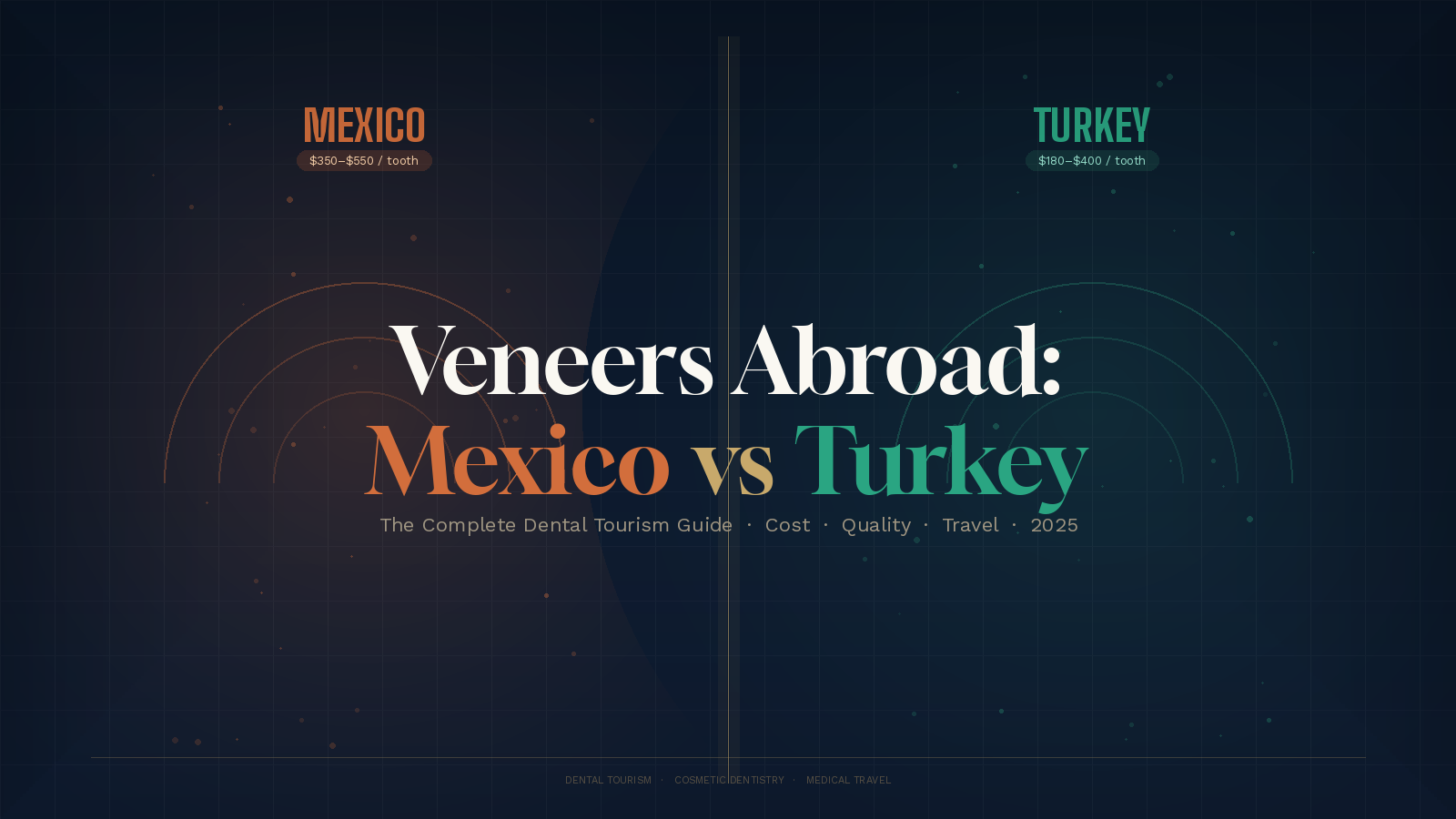
Porcelain veneers in Mexico typically cost $350–$550 per tooth at reputable clinics, with composite veneers ranging from $150–$300 per tooth. Border cities like Los Algodones, Tijuana, and Nuevo Laredo are particularly affordable — sometimes even cheaper — though major cities like Cancún, Guadalajara, and Mexico City offer strong quality-to-price ratios as well.
Who Should Go to Mexico
Mexico is the natural choice for Americans (especially those in the South, Southwest, or West), Canadians, and anyone who values the ability to drive across the border, take a short flight, or combine dental work with a vacation. The travel logistics are simply easier for North American patients.
Quality & Clinics
Mexico's top-tier dental clinics are modern and well-equipped. Many dentists have trained or been certified in the United States and speak fluent English. Clinics in tourist-friendly areas have learned to cater precisely to international patients — coordinating transportation, accommodation, and follow-up care. That said, quality varies significantly, and patients should carefully vet any clinic before committing.
Popular Destinations
Los Algodones (just across from Yuma, Arizona) is often called the "Molar City" — more dental offices per capita than anywhere else on earth. Cancún and Puerto Vallarta let you combine treatment with a beach holiday. Tijuana is the closest option for Californians.
Travel & Logistics
For North Americans, Mexico is hard to beat on convenience. Direct flights to major Mexican cities from the US and Canada are plentiful and cheap. Border towns are even simpler — you can literally walk across. Multiple short trips are feasible if your treatment plan requires more than one visit, which is common with porcelain veneers.
The Case for Turkey
Cost of Veneers
Turkey is fiercely competitive on price. Porcelain veneers typically run $180–$400 per tooth, with many all-inclusive "smile packages" bundling 16–20 veneers with hotel stays, airport transfers, and aftercare for $3,000–$5,000 total. Istanbul and Antalya are the main hubs, with Antalya being especially popular for budget-conscious European patients.
Who Should Go to Turkey
Turkey is the go-to destination for Europeans, Middle Easterners, and anyone who doesn't mind a longer flight in exchange for exceptional value. It's also a fantastic option if you want to combine dental work with genuine tourism — Istanbul is one of the world's great cities, and Antalya offers a stunning Mediterranean coast.
Quality & Clinics
Turkey has invested heavily in its medical tourism infrastructure. Istanbul alone has dozens of JCI-accredited hospitals and dental centers. Turkish dental schools are rigorous, and many specialists have trained across Europe and the US. The country has become particularly well-known for its cosmetic dentistry, and the sheer volume of international patients means clinics have refined their processes. As with any destination, research is essential — the aggressive marketing in this space can make it hard to separate premium clinics from lower-end ones.
Popular Destinations
Istanbul is the dominant player — a cosmopolitan city with world-class clinics, stunning architecture, incredible food, and easy international connections. Antalya is the coastal alternative, popular with Europeans who prefer a resort setting. Izmir is an emerging option with a relaxed, modern atmosphere.
Travel & Logistics
For Europeans, Turkey is very accessible — cheap charter and low-cost flights from nearly every European hub make it a weekend-friendly destination. For North Americans and Australians, the flight is considerably longer (10–12+ hours), which makes Turkey less practical if you need multiple appointments. Most Turkish clinics have adapted their protocols to complete veneers within a single 5–7 day visit, which suits international patients.
A Word on Quality
The most common concern people have about dental tourism is quality — and it's a fair one. The honest answer is that the best clinics in both Mexico and Turkey produce results that are indistinguishable from what you'd receive at a premium clinic in the US, UK, or Australia. The materials are often identical: E.max lithium disilicate and zirconia-based veneers from the same manufacturers used worldwide.
The risk is not the country — it's the clinic. Both destinations have a wide quality spectrum. Doing thorough research, reading verified reviews, looking at before-and-after portfolios, and asking about the dentist's training and certifications is non-negotiable. Many dental tourism agencies can help match patients with vetted clinics, though they typically take a commission, so independent research is still valuable.
One practical note: Turkey's high-volume tourism model means clinics are extremely experienced at completing treatment efficiently. Some patients, however, report feeling rushed. In Mexico, the experience can feel more personalized, particularly at smaller boutique practices. Neither is universally better — it depends on the specific clinic.